Becoming a Residential Property Manager: Exploring Business Models and Why the Department System Excels
Embarking on the journey to becoming a residential property manager is an exciting prospect filled with opportunities for growth and influence. Whether you're stepping into this profession for the first time or seeking ways to optimize your management strategy, understanding the different business setups is essential to achieving success. This blog dives deep into the three primary property management structures (portfolio, pod, and department models), offering insights into their advantages and challenges. Finally, we'll explore why GoodDoors Property Management champions the department model and how it sets a new standard in the industry.
What Is Residential Property Management?
At its core, residential property management involves overseeing rental properties, ensuring they operate smoothly for both property owners and tenants. From leasing and maintenance to rent collection and tenant relations, property managers are central to maintaining harmony and profitability. But how you organize your operations can make or break your success.
Business Models in Residential Property Management
1. Portfolio ManagementThe portfolio model assigns a single property manager to oversee all aspects of a set number of properties. This person handles everything from leasing to maintenance requests and tenant relations.
Advantages:Personalized service: Property owners and tenants deal with one point of contact, fostering trust.
High accountability: The property manager has full control over their portfolio, leading to a sense of ownership.
Challenges:Limited scalability: One person can only manage so many properties before their workload becomes overwhelming.
Skill gaps: A single manager might excel in tenant relations but struggle with legal compliance or maintenance logistics.
2. Pod SystemThe pod system creates small teams, or “pods,” each responsible for a specific group of properties. Each pod typically includes a mix of roles like leasing agents and maintenance coordinators.
Advantages:Team collaboration: Responsibilities are shared, reducing individual workload.
Redundancy: If one team member is unavailable, others can step in.
Challenges:Communication breakdowns: Coordination within pods can lead to miscommunication or duplication of effort.
Inconsistent standards: Each pod may develop its own processes, leading to varying levels of service quality.
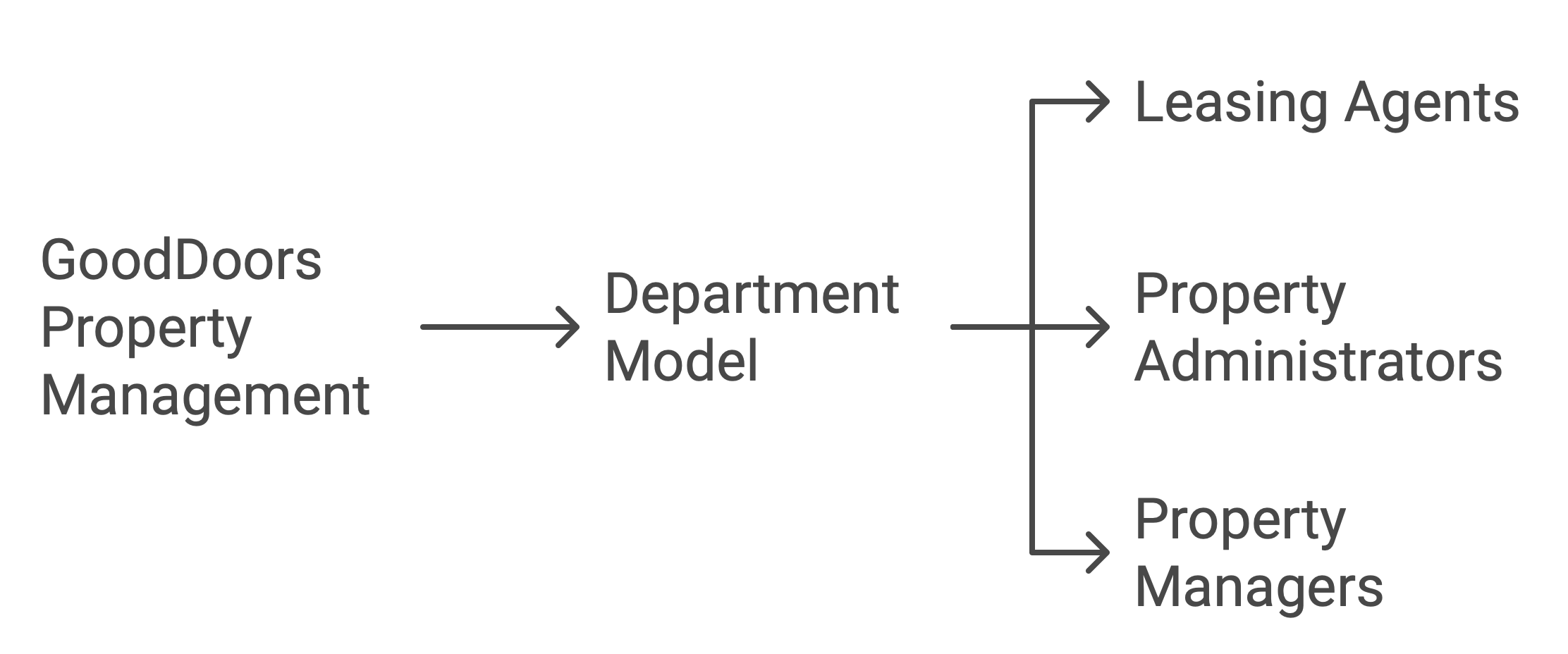
3. Department Model (GoodDoors' Choice)In the department model, responsibilities are divided across specialized roles such as leasing agents, property administrators, and property managers. Each team member focuses on their area of expertise.
Advantages:Efficiency: Specialized roles streamline operations, ensuring tasks are handled by experts.
Scalability: This structure supports growth without compromising service quality.
Consistency: Processes are standardized, resulting in a seamless experience for clients and tenants.
Challenges:Initial setup complexity: Developing SOPs and training for each role requires time and effort.
Interdepartmental communication: Requires robust systems to ensure smooth collaboration between teams.
Why GoodDoors Property Management Prefers the Department Model
At GoodDoors Property Management, we believe that specialization leads to excellence. By adopting the department model, we ensure that every aspect of property management is handled by dedicated experts. Here's how we structure our team and why it works:
Leasing Agents: The First Impression Makers
Our leasing agents focus solely on attracting and onboarding tenants. By dedicating their time to marketing properties, conducting showings, and screening applicants, they ensure high-quality tenants and faster occupancy rates.
Property Administrators: The Backbone of Operations
Property administrators manage inspections, move-ins, move-outs, and tenant communications. Their attention to detail ensures smooth day-to-day operations and timely issue resolution.
Property Managers: The Strategic Overseers
Property managers focus on the big picture: owner relations, financial performance, and strategic planning. This division of labor allows them to provide tailored guidance to property owners while ensuring compliance with regulations.
Why We Believe the Department Model Is Superior
Expert Focus Enhances Service Quality
Each role is tailored to the strengths of the individual, ensuring every task is performed by someone with the right expertise. Leasing agents excel at selling properties; administrators are detail-oriented; property managers are strategic thinkers. Scalable Growth
As GoodDoors expands, the department model allows us to add new team members seamlessly. Unlike the portfolio model, where individual capacity becomes a bottleneck, our structure supports growth without sacrificing service. Better Work-Life Balance for Team Members
Specialization reduces burnout. Team members can focus on their roles without juggling unrelated tasks, creating a more sustainable and enjoyable work environment. Standardized Processes Ensure Consistency
Our department model is supported by robust systems and procedures, ensuring that every tenant and property owner receives the same high level of service.
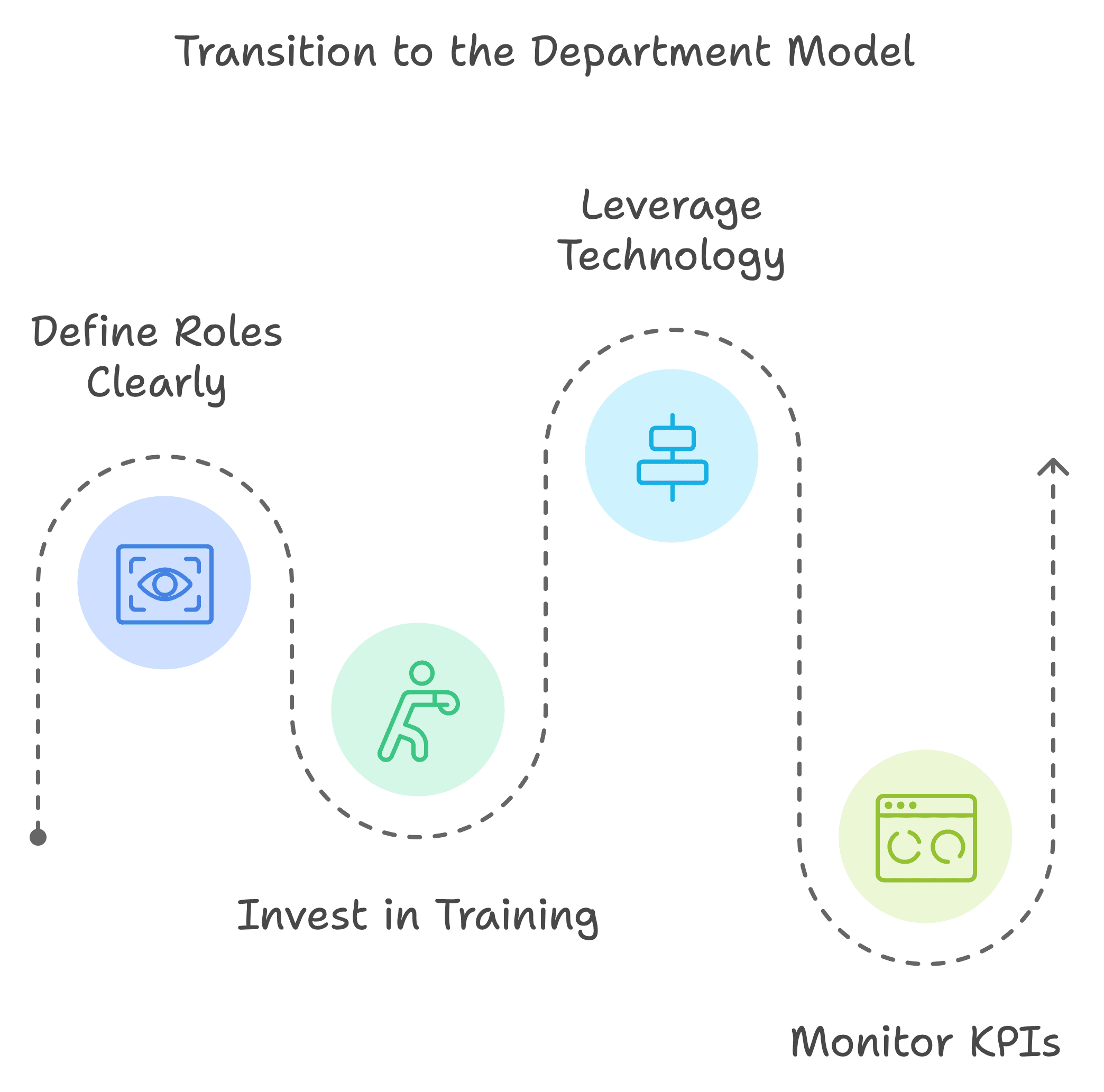
How to Transition to the Department Model
For those considering a switch to the department model, here’s how GoodDoors approached the transition:
Define Roles Clearly: We outlined the responsibilities of each position, ensuring no overlap or gaps.
Invest in Training: Comprehensive onboarding programs helped team members excel in their specialized roles.
Leverage Technology: Tools like PropertyMeld for maintenance and LeadSimple for communication keep our departments aligned.
Monitor KPIs: Regularly tracking key performance indicators ensures accountability and continuous improvement.
Becoming a Residential Property Manager with the Right System
If you're starting out as a residential property manager, choosing the right operational structure is a crucial decision. While portfolio and pod systems have their merits, the department model stands out for its scalability, efficiency, and ability to deliver consistent, high-quality service.
At GoodDoors Property Management, we've seen firsthand how this structure empowers our team, delights our clients, and sets us apart in the competitive property management landscape. Whether you're building your career or rethinking your approach to property management, the department model could be the key to unlocking your potential.
Final Thoughts
As you navigate the path to becoming a residential property manager, remember that your choice of management system will shape your success. By embracing innovation and specialization, you can build a sustainable, thriving business that delivers exceptional results. At GoodDoors, our commitment to the department model reflects our belief in the power of teamwork and expertise, and we're here to help you succeed in your journey.
Would you like more insights on property management systems or personalized guidance on starting your career? Reach out to GoodDoors Property Management today or email keenan.g@gooddoors.com!