

Quick answer (August 2026)
Saskatoon's median asking rent is $1,472 as of August 2026 per Zumper, up 1% year over year, with a 1-bedroom at $1,275 and a 2-bedroom at $1,500. Rentals.ca puts Saskatoon's average asking rent at $1,428 in June and names it one of the most affordable of Canada's 25 largest cities. The CMHC vacancy rate is 3.3%, up from 2.0% in 2024 as new purpose-built supply delivered. The purchase market set records: the Saskatchewan REALTORS Association reported a Saskatoon benchmark home price of $448,400 in June, up nearly 5%, with roughly 1.5 months of supply, the tightest in the province. Saskatoon CMA population reached 378,475 in July 2025, growing 2.36%.
This is a comprehensive 2026 rental market reference for Saskatoon property owners, renters, and investors. We pull the actual numbers from CMHC, the Saskatchewan REALTORS Association, Statistics Canada, and the major rental data providers.
About this guide. GoodDoors is a Saskatchewan property management company with offices in Regina and Saskatoon. We have managed 600+ residential properties since 2017. For our Saskatoon-specific service page, see GoodDoors Saskatoon.Average rent in Saskatoon, August 2026
Zumper publishes Saskatoon rent on a rolling 30-day basis, which makes it the most current source available. Here is the August 2026 picture:
| Unit type | Median asking rent | Year over year |
|---|---|---|
| Studio | $1,064 | down 3% |
| 1-bedroom | $1,275 | down 1% |
| 2-bedroom | $1,500 | up 1% |
| 3-bedroom | $2,131 | up 11% |
| 4-bedroom | $2,700 | up 6% |
| Median (all unit types) | $1,472 | up 1% |
Rentals.ca and Urbanation put Saskatoon's average asking rent at $1,428 in their June 2026 report, listing it alongside Regina and Quebec City as the most affordable of Canada's 25 most populous cities.
Source: Rentals.ca National Rent Report, July 2026 edition.
The standout number is the 3-bedroom at $2,131, up 11%. Larger units are the tight end of the Saskatoon market right now, while studios softened 3%. That split matters if you own a house or a townhouse rather than an apartment. Family-sized rentals are where the pricing power is this year.
The practical takeaway for setting Saskatoon rent: a typical 1-bedroom lands at $1,275, a 2-bedroom at $1,500, and a 3-bedroom above $2,100. Newer buildings command the higher end. Older purpose-built and individually owned units rent below the listed averages.
If you are pricing a Saskatoon property right now, look at comparable units in your specific neighbourhood (Stonebridge and Willowgrove price differently than Riversdale or Pleasant Hill) and discount the listed average by 5 to 10% if your unit is more than 10 years old. Our rent pricing guide walks through the comparable-market-analysis approach, and it applies the same way in Saskatoon.
Where Saskatchewan sits against the rest of the country
Saskatchewan was one of only three provinces where asking rents rose year over year in June 2026, up 0.8%, alongside Nova Scotia (+3.7%) and Manitoba (+0.8%). Rents fell 5.3% in British Columbia and Ontario, 4.2% in Alberta, and 2.2% in Quebec.
Over three years, Saskatchewan has the largest rent increase in the country at +25.6%. Only Ontario and British Columbia are down over that window, both by 8.0%.
The national average asking rent across all property types was $2,033 in June 2026, down 4.3% year over year and the 21st consecutive month of annual decline. Rentals.ca noted that Saskatchewan is "showing clearer signs of flattening out" after leading the country for much of the past year.
One provincial detail cuts against Saskatoon's local trend: Saskatchewan 3-bedroom asking rents were down 6.3% to $1,697 province-wide in June, while Zumper has Saskatoon 3-bedrooms up 11%. Saskatoon's family-rental segment is running hotter than the province as a whole.
Saskatoon vacancy rate
CMHC publishes the most reliable vacancy data through its annual Rental Market Report. For Saskatoon:
| Year | CMHC vacancy rate (purpose-built rental apartments) |
|---|---|
| 2024 | 2.0% |
| 2025 | 3.3% |
Rental Housing Saskatchewan framed this as normalization rather than trouble. Landon Field, the association's CEO, said: "What we're seeing right now is not a cause for concern. It's a normalization after years of very low, even dangerously low, vacancy." On what it means for owners, he added: "For housing providers, it means an opportunity to stand out with quality units, amenities and good service."
Source: SaskToday coverage of Rental Housing Saskatchewan's State of the Rental Housing Market.
For owners of older Saskatoon buildings, the practical impact stays mild. Older mid-market 1 and 2 bedroom units still rent quickly because they price below new construction. For owners of newly built units, higher vacancy is a real signal to price competitively or offer move-in concessions.
CMHC's 2026 mid-year update introduced the idea of a market-specific "balanced vacancy rate range," the level at which rent growth roughly tracks inflation. That update covered only the seven largest metros, so no balanced range has been published for Saskatoon yet.
Population growth in Saskatoon
Saskatoon CMA population reached 378,475 as of July 1, 2025, up 8,709 people or 2.36% year over year, per Statistics Canada. Saskatchewan as a whole passed 1.26 million and posted the third-highest provincial growth rate in the country.
Source: Statistics Canada Table 17-10-0148-01, released January 14, 2026.
Growth has slowed, and that is the important change. Our April update cited 4.1% year-over-year growth from the July 2024 estimate. The July 2025 reading is 2.36%, still strong by Canadian standards but a clear deceleration. CMHC's lead economist for the Prairies, Taylor Pardy, pointed to national immigration policy returning to more typical levels as a key force reshaping the Saskatchewan market. Newcomers overwhelmingly rent before they buy, so a slower intake shows up in rental demand before it shows up anywhere else.Two caveats on this number. CMA-level estimates run about a year behind, so July 1, 2025 is the newest available and the next release lands around January 2027. Statistics Canada also revises prior years, so the July 2024 figure now reads 369,766 rather than the 367,336 we cited in April.
Per the 2021 Census, the Saskatoon CMA homeownership rate was 68.2%, which means roughly 32% of households rent. (An earlier version of this article said 10%. That was wrong, and we have corrected it.)
Source: Statistics Canada, Focus on Geography, Saskatoon CMA.
What is driving demand in Saskatoon
BHP Jansen mine
Jansen is the world's largest potash project and the single biggest swing factor in Saskatoon-area rental demand. The picture changed in 2026 and owners should understand both halves of it.
Stage 1 is on track. BHP confirmed in June 2026 that Jansen Stage 1 is achieving the critical-path milestones set in its January 2026 estimate, with first production still expected mid-CY2027. Construction-phase employment runs through that window. Stage 2 slipped substantially. BHP pushed Stage 2 first production to late FY2031, a two-year extension, and raised the investment estimate from US$4.9 billion to US$6.9 billion. As of the end of May 2026, Stage 2 was 16% complete with engineering 83% complete. BHP also flagged an expected impairment charge of roughly US$2.3 billion on its Jansen investment to date.Source: BHP, Update on Jansen Stage 2 Potash Project, June 2026.
What this means for rental demand: the Stage 1 construction workforce peak is close to its end, and the second construction surge that Stage 2 would have brought is now years further out. Jansen remains a long-term anchor for Saskatoon (BHP describes a combined mine life of nearly 60 years producing about 10% of global potash) but the near-term contractor-housing pressure is more likely to plateau than to keep climbing. Demand stays concentrated in 1 and 2 bedroom units near the airport corridor and in furnished short-term inventory.
Population growth
At 2.36%, Saskatoon still grows faster than most Canadian cities, and international migration remains the primary driver. Renters dominate the early years of newcomer settlement.
University of Saskatchewan
Roughly 26,000 students at the U of S create predictable late-summer demand. Properties near campus turn over reliably each August. This is concentrated demand, not market-wide, but it shapes rent in specific zones (College Park, Varsity View, City Park, Sutherland).
Provincial Nominee Program
Saskatchewan continues to draw skilled-worker immigration through the SINP, though at levels shaped by the federal pullback in national immigration targets.
What is coming online (new supply)
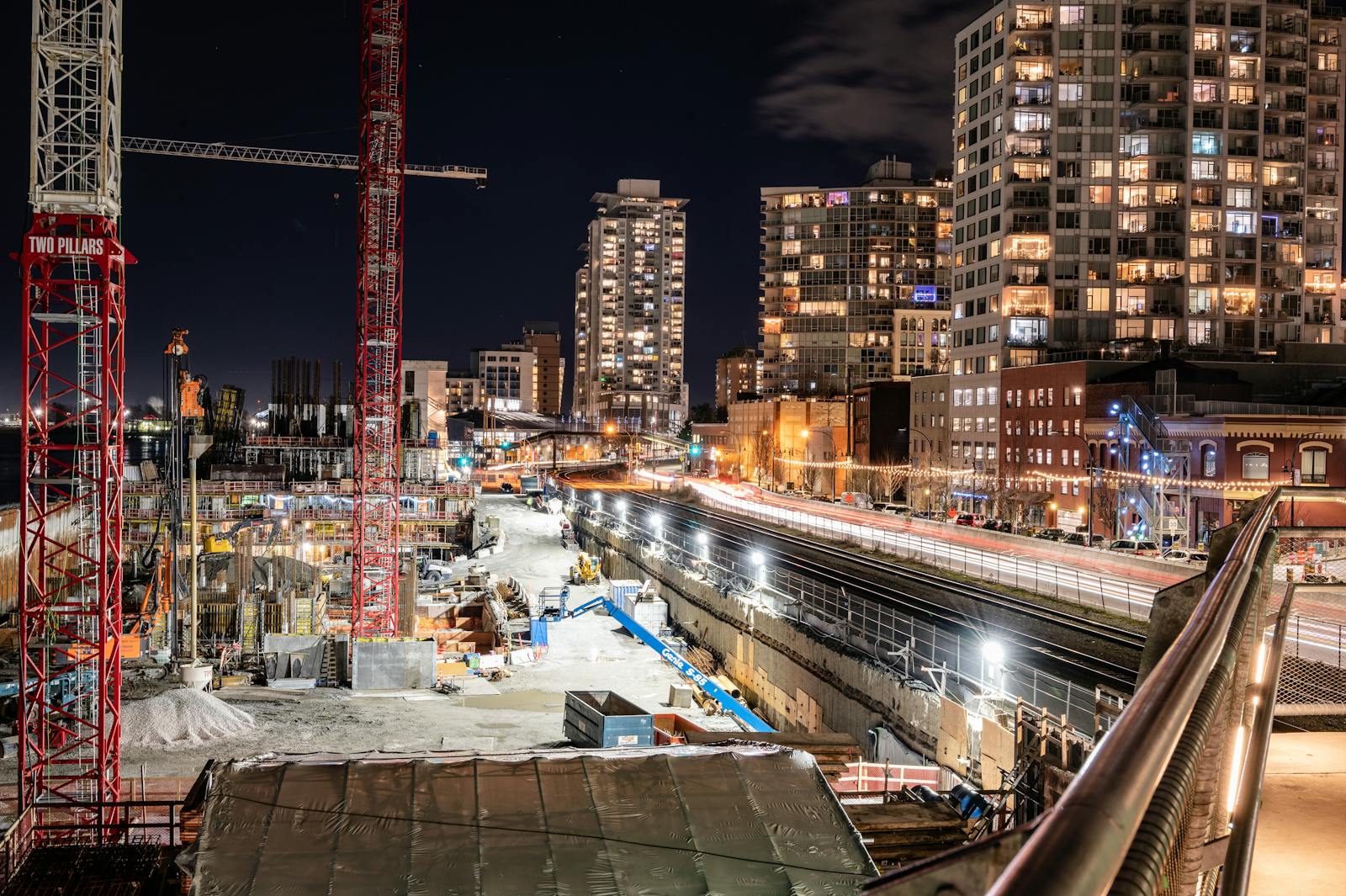
Saskatchewan leads the country in housing starts, and most of that growth is purpose-built rental. CMHC counted roughly 2,980 apartment and row-housing units under construction in Saskatoon as of late 2024, the most recent figure published at that granularity, and roughly three times Regina's 1,003 units.
Most new supply has concentrated in the South and Southeast zones (Stonebridge, Brighton, Willowgrove, Rosewood, Evergreen). Older zones (Mayfair, Caswell, Riversdale, City Park, Sutherland) see less new construction and tighter vacancy as a result.
The province's secondary suite incentive program adds a second supply channel, offering grants covering up to 35% of construction costs for legal secondary suites including basement suites, garage units, and laneway homes. Rental Housing Saskatchewan reports it has added roughly 1,000 rental units across the province in three years. For a Saskatoon homeowner with an unfinished basement it is a real path to rental income, and for existing small landlords it is new competition.
The purchase market: record prices, tightest supply in the province
Saskatoon's purchase market changed more than its rental market since our April update.
| Metric | June 2026 | Year over year |
|---|---|---|
| Saskatoon benchmark home price | $448,400 (record) | up nearly 5% |
| Saskatoon sales | 589, among the strongest Junes on record | 22% above the 10-year average |
| Saskatoon inventory | 43% below the 10-year average | |
| Saskatchewan benchmark price | $385,900 (record) | up nearly 5% |
| Saskatchewan sales | 1,849 | up 5%, and 18% above the 10-year average |
| Saskatchewan months of supply | 2.51, the lowest ever recorded for June |
Saskatoon's $448,400 benchmark broke the record set the month before. (Our April update said Saskatoon-specific price data was not publicly disaggregated. That was wrong. The SRA publishes it, and we have corrected it here.)
Chris Guérette, the SRA's CEO, described conditions in late July: "Saskatoon is sitting at 1.5 months. Regina is sitting at 1.6." A balanced market is four to six months. She added, "We're talking about weeks here. It's not comfortable."
Source: 650 CKOM interview with the SRA CEO, July 27, 2026. These months-of-supply figures come from an interview rather than a published statistics release.
Why a rental guide covers this. Saskatoon's benchmark price is roughly $92,000 above Regina's. When entry prices climb that fast against 1.5 months of supply, would-be buyers stay renters longer. A tight purchase market supports rental demand even while asking rents are flat.How Saskatoon compares
| Market | Median or average asking rent | CMHC vacancy 2025 | Benchmark home price (June 2026) |
|---|---|---|---|
| Saskatoon | $1,472 median (Zumper, Aug) / $1,428 average (Rentals.ca, June) | 3.3% | $448,400 |
| Regina | $1,389 median (Zumper, Aug) / $1,397 average (Rentals.ca, June) | 2.7% | $356,400 |
| Canada | $1,940 median (Zumper) / $2,033 average (Rentals.ca, June) | see note | varies by source |
Note on the vacancy column: CMHC's 2026 mid-year update reported 2025 apartment vacancy for the seven largest metros only, ranging from 2.7% in Halifax to 5.0% in Calgary. It did not publish a single national figure.
For the Regina side, see our Regina rental market update for August 2026.
Affordability: rent-to-income in Saskatoon
The "30% rule" says a household should spend no more than 30% of gross monthly income on rent. At Saskatoon's median of $1,472, that implies a household income of roughly $58,900 per year.
For a 1-bedroom at $1,275, the implied income is about $51,000. For a 2-bedroom at $1,500, roughly $60,000. For a 3-bedroom at $2,131, about $85,200, which is a meaningful step up and part of why family-sized rentals turn over less often.
Most full-time positions in Saskatoon's core sectors (Jansen contractors, healthcare, the U of S, agribusiness, mining services, and government) clear these thresholds for 1 and 2 bedroom rentals. Studio and bachelor units are accessible at part-time and entry-level wages.
Seasonality patterns in Saskatoon
Rental demand in Saskatoon follows predictable seasonal patterns:
- March to May: spring move-up season. Demand picks up and rent on newly listed units holds firm
- June to August: peak demand, driven by end of fiscal year and pre-fall U of S student arrivals. August is the highest-demand month of the year
- September to October: post-September lull. Listings priced too high in summer get repriced now
- November to February: slowest months. Vacancy stretches longer and rent flexibility is highest. Winter movers often have unusual circumstances (job relocation, eviction, lease break)
Saskatoon winters are real. Showings in January at -25C are harder to schedule and harder to convert. Owners listing in deep winter typically accept slightly lower rent or a longer vacancy.
What this means for Saskatoon landlords
The market shifted from undersupplied to balanced in a single year and has stayed there. Practical implications:
- Tenant retention matters more than rent maximization. Replacing a quality tenant with a 30-day vacancy plus make-ready cost typically wipes out 12 months of a $50 per month increase
- Know your segment. Studios softened 3% while 3-bedrooms rose 11%. If you own a house or townhouse, you have more pricing room than the headline suggests. If you own a studio in a new building, you have less
- New construction is your direct competitor. If your unit is older, lean into what newer builds cannot offer (mature trees, larger floorplates, established neighbourhood, transit access). If your unit is newer, price competitively against inventory still delivering
- Saskatchewan has no rent control and no cap on the amount. For a periodic tenancy, a landlord who is not a member of a prescribed association serves a 12-month Notice of Rent Increase, the increase cannot begin within the first 18 months of the tenancy, and rent can only be raised once every 12 months. Members in good standing of the SKLA or NPHPS serve a six-month notice, cannot raise within the first 12 months, and can raise once every six months. Fixed-term tenancies use the Term Lease Two Month Notice form, served at least two months before the tenancy end date. See the Government of Saskatchewan rent increase rules and our Saskatchewan rent increase law guide
- Document everything. With more units competing for tenants, applicant quality varies. A documented tenant screening process and proper move-in inspection are worth the time
- Lean on local data. Both GoodDoors and GoodDoors Saskatoon provide free rental analysis on Saskatoon properties, using the same comparable-property data we use for clients
What this means for Saskatoon renters
A 3.3% vacancy rate is good for renters. More choice in newly built units, more landlords willing to offer concessions on newer buildings (free month, waived deposit, included parking), and more room to negotiate, especially in the Southeast and South zones where new supply concentrated. Older neighbourhoods (City Park, Mayfair, Riversdale, Sutherland) remain tighter.
The exception is family-sized housing. With 3-bedroom asking rents up 11%, renters looking for a house or townhouse have the least room to negotiate.
If you are searching now, check multiple rental platforms and prioritize buildings completed in the past three years, where vacancy is highest and move-in incentives are most likely. For neighbourhoods worth considering, see our guide on best areas to live in Saskatoon.
What is new since our April update
- Saskatoon home prices set records. The benchmark hit $448,400 in June with inventory 43% below the 10-year average and roughly 1.5 months of supply, the tightest in Saskatchewan
- We corrected two errors. Our April update said Saskatoon price data was not publicly disaggregated (it is, and we now publish it) and that about 10% of Saskatoon's population rented (the 2021 Census figure is roughly 32% of households)
- BHP pushed Jansen Stage 2 to late FY2031 and took a US$2.3 billion expected impairment, while Stage 1 stayed on track for mid-CY2027. The near-term contractor-housing story is closer to a plateau than a climb
- Population growth slowed from 4.1% to 2.36% as national immigration levels returned to more typical numbers
- The rent market split by unit size. Studios down 3%, 3-bedrooms up 11%
- Whether Saskatoon's vacancy stabilizes around 3% or climbs as remaining construction delivers
- Whether the 3-bedroom premium holds or provincial softening (down 6.3%) catches up to Saskatoon
- Whether CMHC publishes a "balanced vacancy range" for Saskatoon the way it did for the largest metros
Where the data does not yet exist
For transparency, here is what we could not source for this update:
- CMHC does not publicly disaggregate Saskatoon rent by neighbourhood zone, year built, or structure type at the level some larger Canadian cities receive. The Housing Market Information Portal and the Saskatoon rental market data tables carry the underlying figures
- Units under construction is a late-2024 figure. CMHC has not published a newer Saskatoon-specific count at that granularity
- Absolute active-listing counts are not published by the SRA. They report months of supply and the gap to the 10-year average, so we do not quote a listing count
- Apartments.com and Zillow figures are not in this update. Both blocked automated retrieval when we refreshed, and we would rather omit a number than carry forward a stale one as current
Frequently Asked Questions
What is the average rent in Saskatoon in 2026?
As of August 2026, Zumper puts Saskatoon's median asking rent at $1,472 across all unit types, up 1% year over year. A studio averages $1,064, a 1-bedroom $1,275, a 2-bedroom $1,500, and a 3-bedroom $2,131. Rentals.ca reported an average of $1,428 for June 2026.
What is the vacancy rate in Saskatoon?
Per CMHC's most recent Rental Market Report, Saskatoon's vacancy rate for purpose-built rental apartments was 3.3% in 2025, up from 2.0% in 2024. The increase reflects new purpose-built supply delivering faster than population could absorb it.
What is the population of Saskatoon in 2026?
Saskatoon CMA population reached 378,475 as of July 1, 2025, up 8,709 people or 2.36% year over year per Statistics Canada. That is the most recent CMA-level estimate available; the next release is expected around January 2027.
Are rent prices going up in Saskatoon?
Saskatoon rents are close to flat overall, with the all-unit median up 1% year over year. The market has split by unit size: studios are down 3% while 3-bedrooms are up 11%. Nationally, average asking rents are down 4.3%, so Saskatoon is outperforming the country.
Is Saskatoon a cheap city to rent in?
Yes. Saskatoon is roughly 24% below the national median rent of $1,940 per Zumper, and Rentals.ca lists it among the most affordable of Canada's 25 largest cities. Within Saskatchewan, Saskatoon is slightly more expensive than Regina.
How does Saskatoon rent compare to Regina?
Saskatoon is higher. Zumper's August 2026 medians are $1,472 for Saskatoon against $1,389 for Regina. Saskatoon's vacancy rate is 3.3% against Regina's 2.7%. On home prices the gap is much wider: $448,400 against $356,400.
What income do I need to afford rent in Saskatoon?
Using the 30% of gross income rule, Saskatoon's median rent of $1,472 implies a household income of about $58,900 per year. A 1-bedroom at $1,275 implies roughly $51,000, a 2-bedroom at $1,500 about $60,000, and a 3-bedroom at $2,131 roughly $85,200.
What is the Saskatoon benchmark home price in 2026?
The Saskatchewan REALTORS Association reported a record Saskatoon benchmark home price of $448,400 in June 2026, up nearly 5% year over year. Saskatoon inventory sat 43% below the 10-year average.
How much notice does a Saskatoon landlord have to give for a rent increase?
For a periodic tenancy, a landlord who is not a member of a prescribed landlord association must serve a 12-month Notice of Rent Increase, cannot start the increase within the first 18 months of the tenancy, and can only increase once every 12 months. Members in good standing of the SKLA or NPHPS serve a six-month notice, cannot increase within the first 12 months, and can increase once every six months. Saskatchewan has no cap on the amount of the increase.
When is the next CMHC rental market report?
CMHC publishes its annual Rental Market Report in December. The 2026 edition is expected in December 2026.
Sources
- Saskatchewan REALTORS Association, June 2026 release
- Saskatchewan REALTORS Association market statistics
- 650 CKOM: SRA CEO on the Saskatchewan housing market, July 27 2026
- BHP: Update on Jansen Stage 2 Potash Project, June 2026
- Zumper: Saskatoon rent research
- Rentals.ca National Rent Report
- CMHC Rental Market Report
- CMHC 2026 Mid-Year Rental Market Update
- CMHC 2025 Saskatoon data tables
- Statistics Canada: Population estimates table 17-10-0148-01
- Statistics Canada: Focus on Geography, Saskatoon CMA 2021 Census
- SaskToday: Saskatchewan rental market stabilizing
- Government of Saskatchewan: Rent increases
Related Resources
Main service pages- GoodDoors Saskatoon: our Saskatoon office and Saskatoon-specific services
- GoodDoors: our Regina office and main services
- Regina Rental Market Update August 2026
- Setting the Right Rent
- Saskatchewan Rent Increase Law
- Landlord-Tenant Rights in Saskatchewan
- Property Management Fees in Saskatchewan
- Rental Management Services
- Tenant Screening Services
- Eviction Laws in Saskatchewan
- Security Deposit Saskatchewan
- Normal Wear and Tear
- Find Apartments for Rent in Saskatoon
- Best Areas to Live in Saskatoon
- Pet-Friendly Rentals in Saskatoon